Batman Begins
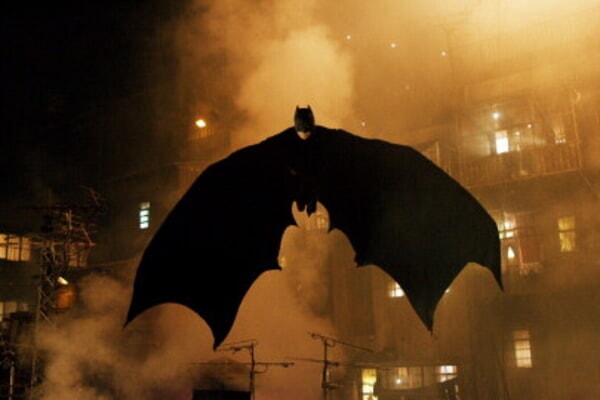
Windows flip 3d. Dec 08, 2010 The story of how Bruce Wayne became what he was destined to be: Batman. When his parents a killed, millionaire playboy Bruce Wayne relocates to Asia when he is mentored by Henri Ducard and Ra's Al. Filmmakers from Frank Miller to Joel Schumacher reveal details of projects that nearly got off the ground in the years between 'Batman & Robin'.
Parents need to know that Batman Begins features hard and fast violence, martial arts and shootings conveyed through dark, abrupt, sometimes scary imagery. Less cartoonish than the and movies, these scenes are loud and rough. The caped crusader's origin story includes the murders of his parents, his ensuing depression and attempt to shoot the shooter, martial arts training and fighting, frightening subjective images brought on by hallucinogenic drugs, brief debauchery (drinking, smoking, and swimming-in-a-hotel-fountain with vacuous starlet-types), an even briefer kiss with his romantic interest, a faux drunken speech, and some raucous driving in a seriously armored Batmobile. In BATMAN BEGINS, traumatized by the murder of his parents when he was a child, Bruce Wayne loses his way.

When tempted to assassinate the man responsible, Bruce instead watches as someone else guns down his parents' killer. Wayne then disappears for several years. When others try to recruit Wayne to join them in destroying Gotham City, in order to destroy its evil, Wayne instead returns to fight for her and rid her of the evil within. He enlists the help of butler Alfred and Wayne Enterprises gadgets-maker Lucius Fox in order to create the 'image' of Batman. Intended to intimidate villains, the new hero wears an elaborate Bat-costume and drives a frankly awesome Batmobile, a futuristic all-terrain military vehicle painted bat-black and capable of all manner of vehicular acrobatics. A meditation on the different motivations for violence, this is smart and entertaining, with some harsh action scenes.
Bruce is full of grit and fury in Batman Begins, a well as grim arrogance and a sense of comedy.Self-righteous, flagrantly emotional as well as coldly rational, Batman's sense of mission aligns him with last good cop Lt. It also means his methods aren't always so distinct from the criminals', but he is effective, as deterrent and as what Gordon calls 'escalation.' Both villains and Batman can only do more.
This past weekend, I re-watched Batman Begins. There’s a lot to like about Christopher Nolan‘s 2005 reboot. It can’t be understated how Nolan’s take, loosely based on Frank Miller‘s graphic novel Batman: Year One, influenced the action genre and origin stories by playing up the gritty and realistic aspects of mythic characters.
Sending Bruce Wayne into the wilderness and paying attention to details like “How does he make his cowl?” really got into Batman on a granular level whereas previous Batman movies were like, “He gets drive-thru” and “He has his own credit card.” Overall, the film works and was a much-needed resurrection for the character on the big screen after the disastrous Batman & Robin. But the reboot is not without its faults, especially as it reaches its climax.Earlier in the film, Bruce Wayne ( Christian Bale) is presented with a prisoner he must kill to fully join the League of Shadows, and he refuses to be “an executioner.” This ties into Batman in the larger popular consciousness as a superhero who doesn’t kill. While Batman Begins wrestles with the concept of why Batman is more than just a vigilante, it makes sure to set the ground rules early on that Bruce Wayne does not kill his enemies. When Ducard/Ra’s al Ghul ( Liam Neeson) cautions that his enemies will not be so compassionate, Bruce replies, “That’s why it’s so important.
It separates us from them.” This is a decision rooted earlier in the film where Rachel ( Katie Holmes) is disgusted that Bruce would consider murdering his parents’ killer, Joe Chill ( Richard Brake). Her disappointment and revulsion with such a choice makes Bruce realize that he can’t become a murderer even when the system goes against his wishes.The film has a way to test Bruce’s resolve at the climax of the film when he has his final confrontation with Ra’s. Here’s how the scene plays out: Batman and Ra’s fight on the speeding train. Ra’s smashes the controls so that the train can’t be stopped.
Then, when Batman has Ra’s defeated, Ra’s replies, “Are you finally ready to do what is necessary?” Batman replies, “I won’t kill you, but I don’t have to save you,” and then leaves Ra’s in a situation from which he can’t possibly escape. The train crashes, Ra’s dies, the audience cheers.One could argue that Ra’s demise is of his own making.
He’s the one who smashed the train controls, he’s the one who planned to take the train into Wayne Tower and set off the microwave emitter, and he’s a bad guy. But none of that should matter to Bruce. Again, we’ve established that his code is “Batman does not kill.” To reach a climactic moment and then split hairs over what constitutes killing completely undermines that character and his code. It turns him from a hero into a lawyer arguing that technically he’s not killing Ra’s; he’s just not saving him even though he has the power to do so and refusing to do so will result in Ra’s death.The way this scene plays out is that Nolan and co-writer David S.
Goyer wanted to give the audience a moment where they could cheer for Batman defeating the bad guy while technically not making Batman a murderer. Their mistake was predicating a moment of heroism on a technicality. No, Batman does not technically kill Ra’s, but that’s not particular heroic, nor does it emphasize Batman’s moral code and how it differs from his enemies.
What makes Batman victorious is that his morality is different from the League of Shadows, who he has defeated. He’s not an executioner and he believes that the courts should perform their function.Circle back to earlier in the film when Bruce is planning to kill Joe Chill in the courthouse. Before he gets his chance, a woman comes out of nowhere and kills Joe Chill on behalf of Carmine Falcone ( Tom Wilkinson).
Based on where Batman ends up, this earlier moment is now triumphant. As long as your enemies die and you’re not personally responsible, then all is well that’s ends well. Boom beach armory. In this framing, Bruce hasn’t really grown and still believes that evil must be punished with an extrajudicial death sentence.So if the script needs Ra’s to die but Batman can’t kill him, what’s the solution?
The scene is frustrating because the answer is readily apparent. Batman should simply reach out to save Ra’s and then have Ra’s reject Bruce’s help out of bitterness and enmity.
The train is moments away from crashing so Bruce would have no choice but to fly away since he has no reason to lose his own life. But just the attempt to save Ra’s would show that compassion isn’t a weaknesses and that Batman’s behavior offers life and salvation while Ra’s beliefs only lead to death and destruction.Instead, we got a pithy quip from Batman and a moment that undermined our main character’s heroism.